Summer puts a lot of pressure on the garden. Heat, strong sun and rapid growth can quickly undo months of careful work.
This week I focused on a few small but important jobs to protect and support fruiting plants before the hottest stretch of weather settles in.
Nothing dramatic just steady seasonal care that helps prevent problems later.
Strawberries — Preparing for Heat
Strawberries are generous plants, but they can struggle once temperatures climb. Fruiting during summer requires a bit of extra attention to keep them healthy and productive.
Why shade matters
Direct summer sun can scorch leaves, dry out developing fruit, and stress the plant’s root system. Even temporary shade cloth during extreme heat can make a noticeable difference.
Shade:
- Reduces leaf burn
- Slows moisture loss
- Helps fruit develop more evenly
It doesn’t have to block all sunlight, but soften the harshest part of the day.

Removing dead debris
Old leaves and spent growth tend to collect around the base of strawberry plants. In hot weather, this trapped material can hold moisture and reduce airflow.
Clearing it out:
- Improves circulation
- Reduces fungal risk
- Encourages fresh, healthy growth
It’s a small job that makes the whole patch look lighter and healthier.
Feeding and watering
During fruiting, strawberries benefit from consistency.
Rather than frequent shallow watering, I focus on deeper watering to encourage stronger roots. A light feed supports continued flowering and fruit production without pushing excessive leafy growth.
Summer care is about balance and enough support to sustain fruiting, without overstimulating the plant.
What I’m watching over the next few weeks
As the heat continues, I’ll be monitoring:
- Signs of leaf scorch
- Dry or misshapen fruit
- Any fungal issues after humid days
Prevention now is far easier than correction later.
Pomegranate — Supporting First Fruit
This pomegranate was replanted not long ago, so seeing it fruit this early feels unexpected and quietly rewarding.
Transplanted trees often spend their first season focusing on root establishment. Fruit production this soon suggests it has settled in well.

Why lifting fruit matters
Some of the developing fruit was resting close to the ground. When fruit sits on soil, it becomes more vulnerable to:
- Rot
- Pest damage
- Splitting
Gently lifting and supporting the fruit improves airflow and keeps it clean as it develops.
A light pruning approach
In summer, heavy pruning can stress a tree. Instead, I focused on minimal adjustments:
- Removing crowded or crossing growth
- Improving airflow
- Maintaining structure
The goal isn’t reshaping, just guiding and supporting.

Why this moment feels special
There’s something meaningful about seeing a replanted tree respond well. It’s a reminder that patience and steady care usually pay off even if progress feels slow at first.
Boysenberries — Guiding Growth
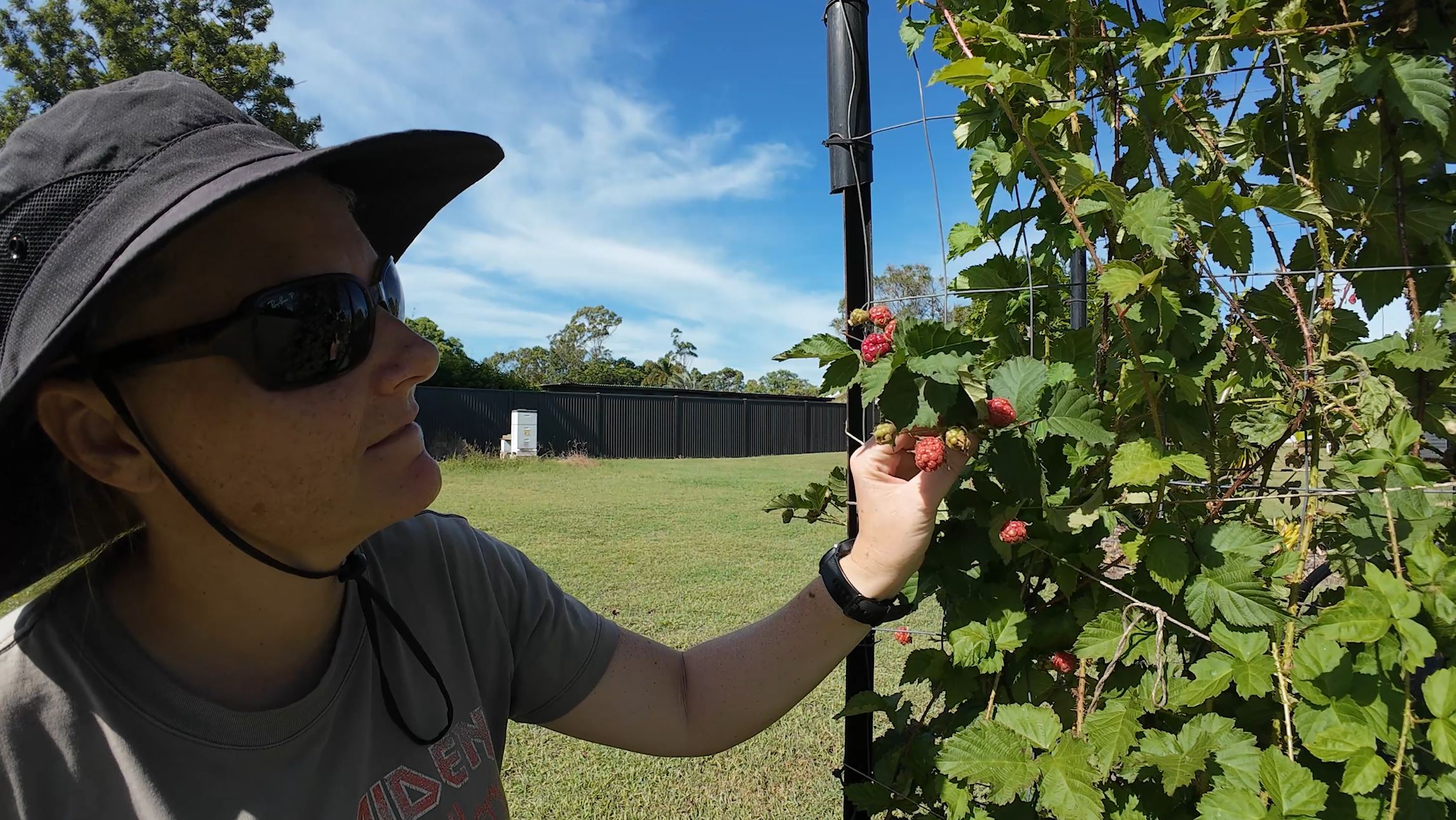
Boysenberries grow quickly and can become tangled if left unsupported. As the canes lengthen and fruit begins forming, structure becomes important.
Supporting vertical growth
Tying canes to supports:
- Improves airflow
- Keeps fruit off the ground
- Makes harvesting easier later
It also prevents the plant from collapsing under its own weight once fruit ripens.

Cleaning up the base
Removing excess lower growth keeps the plant tidy and reduces disease pressure. It also directs energy upward into fruiting canes rather than unnecessary foliage.
First fruit of the season
The first fruit appearing always feels like a small milestone. It’s not a large harvest yet just a sign that the season is unfolding as it should.

What comes next
Over the coming weeks, I’ll continue:
- Guiding new growth
- Monitoring fruit development
- Protecting plants during intense heat
Summer care is ongoing with small adjustments made consistently.
A Quiet Reminder About Seasonal Care
Seasonal gardening isn’t about big transformations or dramatic changes.
It’s about paying attention.
A bit of shade at the right time.
A gentle lift to protect developing fruit.
A simple tie to guide growth.
These small, steady actions are what carry a garden through summer.
And often, they’re the difference between plants that simply survive and plants that continue to thrive.
Leave a Reply